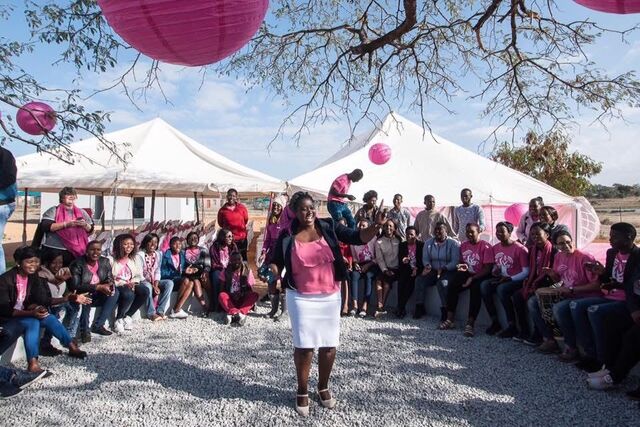
At Good Work Foundation, we understand that our impact cannot and should not be contained within the boundaries of our campuses. Those spaces matter deeply and are where so much of the visible energy of GWF lives. But some of our most meaningful work happens beyond them, through people and through systems that allow change to travel further than we ever could on our own.
The Teacher Support Programme is one of the most wonder-filled expressions of this.
Through practical workshops and real-time classroom engagement across our forty-two partner schools, we work alongside teachers to build essential digital skills and integrate technology into their classrooms.
If we want to shift education in a meaningful and lasting way, we’ve learned that we cannot focus only on the learners who come through our programmes. We also need to stand alongside the educators who are already in classrooms every day, because when a teacher grows in confidence and capability, that impact carries into hundreds of lives over time and multiplies naturally. As our Schools Liaison Manager, Crispen Bvumbghe, often reminds us: “if you empower a teacher, you also empower all the learners they teach every day.”
For close to a decade now, Crispen has been working alongside teachers in our partner schools, supporting them as they navigate the realities of a rapidly changing education landscape. This is not a small, contained piece of work. In 2025 alone, we worked with teachers across forty-two public schools, running over fifty workshops and supporting hundreds of educators.
We meet teachers where they are and walk with them as they begin to build confidence in using technology in ways that feel practical and relevant to their own context. Over time, we have seen something shift. There was a point where many teachers experienced technology as something slightly out of reach - something that belonged to the learners, or to a different kind of classroom, rather than their own. What has been so encouraging to witness is how that perception has changed. What often begins as curiosity slowly becomes experimentation, and then, with the right support, grows into a sense of confidence.
We now see teachers stepping into this space with far more ownership. They are not only using digital tools, but beginning to understand how those tools can unlock different ways of teaching. Lessons become more dynamic, more engaging, and more responsive to the needs of learners. Concepts that were once difficult to explain can be explored in new ways, and there is a noticeable shift in the energy of the classroom as a result.
What stands out to us is not just the adoption of technology, but the change in mindset that sits behind it. Teachers are no longer asking whether this belongs in their classroom, they are asking how they can use it better, how they can go further, and what more is possible for their learners. In more recent engagements, we are even seeing teachers express a desire to go beyond basic tools, asking to learn how to incorporate things like AI and more advanced digital methods into their teaching. Insights gained from Teacher Attitude Surveys collected from 2022 to 2025 reveals a positive evolution in teacher attitudes: There is a clear trajectory from ‘Digital Apprehension’ in early 2022, to ‘Digital Integration’ in 2023 to 2024, and finally, to ‘Digital Advocacy’ last year.
At the same time, we are very aware that this work is happening within a broader context. Education in South Africa is in a moment of transition, where different generations of teachers are working side by side, often shaped by very different training and experiences. Alongside this, we are seeing a new generation of teachers coming through with a different kind of energy, one that is open, curious, and willing to try new approaches, but not always supported by the systems they step into.
This has made us think more intentionally about how we create spaces for that energy to be sustained.
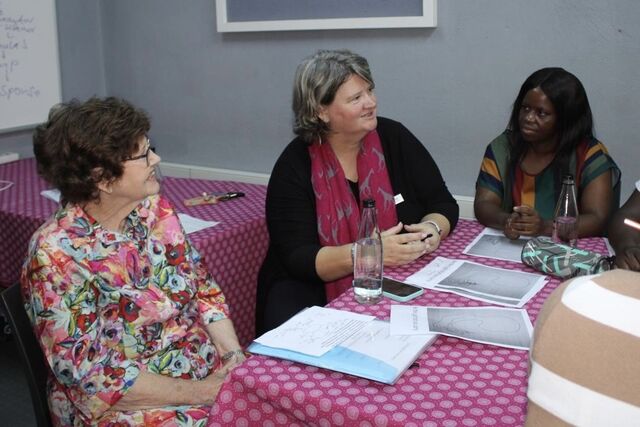
As our CEO Kate Groch reflects: “People become the energy they are surrounded by, and if we want to see confident, future-facing teachers in our schools, we need to ensure that they are not isolated in that journey.” This thinking has led to the early stages of what we are now calling the Dynamic Teachers Forum, a growing network of young teachers from our partner schools, as well as members of our own team who are graduating with education degrees and beginning to step into teaching roles beyond GWF.
It is still evolving, but already it is becoming a meaningful space for connection, shared learning, and continued support. We hosted our first Dynamic Teachers Workshop at Hazyview Digital Learning Campus in March, in partnership with Keller Education, with the aim of this becoming an annual event. What matters most to us is not the format, but the feeling that sits behind it, which is that teachers are part of something larger than their individual classrooms, and that their growth is something worth investing in over time.
When we look at the Teacher Support Programme as a whole, what we see is a natural extension of our broader mission. We have always been committed to reimagining how education is experienced, not only on our campuses, but wherever learning is taking place. This programme allows us to do exactly that by working within existing school environments and strengthening the people who hold those spaces every day.
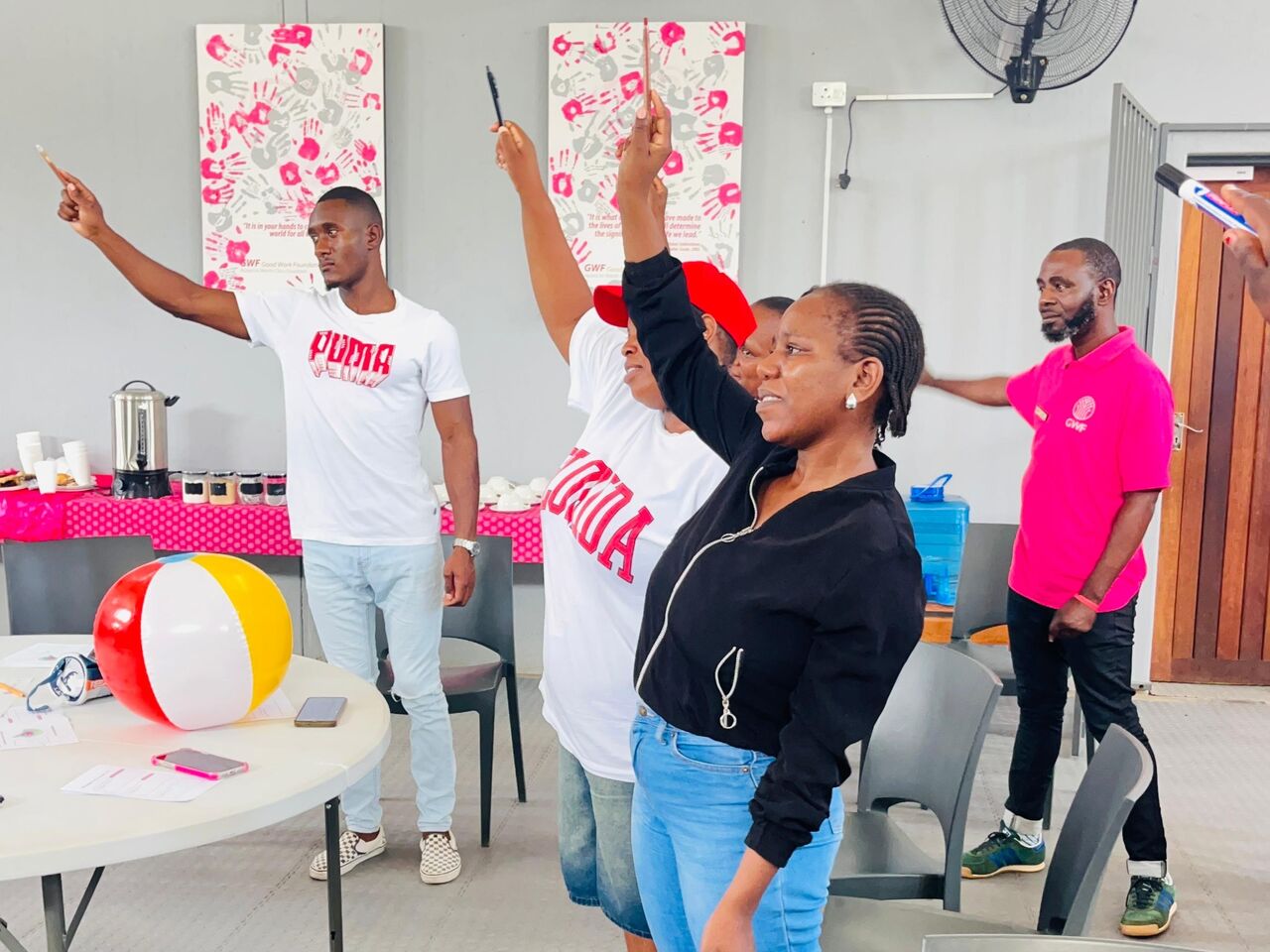
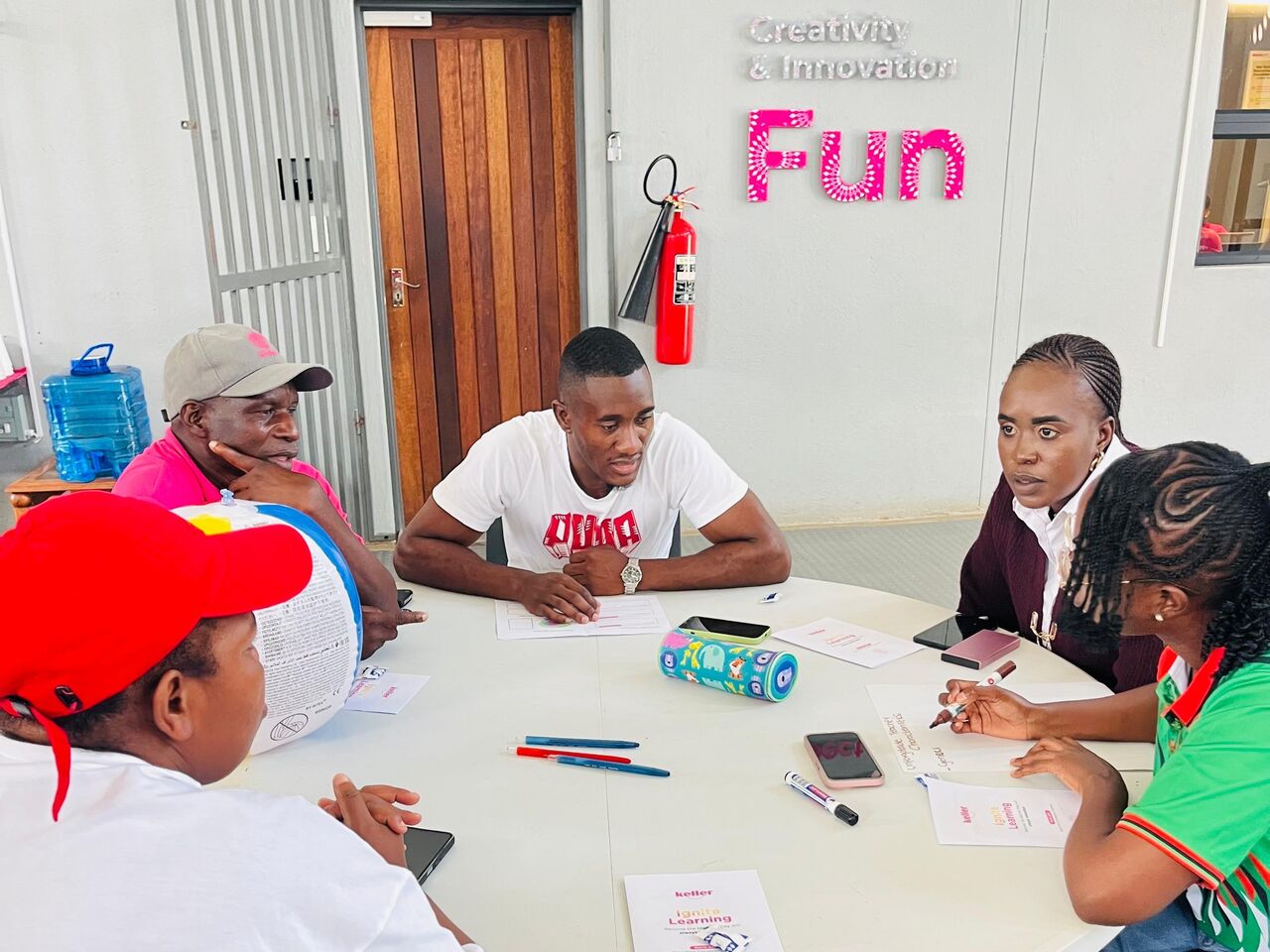
This may not be the most visible part of our work, but it is one of the most far reaching.
We see it in the confidence of a teacher who is willing to try something different, in the way a lesson begins to shift, and in the growing sense that learning can look and feel different to what it has been before. Over time, these changes begin to connect, and what starts as a series of individual moments becomes something more systemic.
For us, this is what it means to extend impact beyond our campuses. It is not only about reaching further on our own, but about reimagining education through others, and trusting that when teachers are supported, the long lasting effect will carry far beyond what we could ever do alone.